


If we want children to eat well, we need to think beyond the plate

Children's food choices don't happen in a vacuum.
The foods children encounter, the people they see eating them, what is available and accessible to them, what is promoted to them and the experiences they have with food all contribute to the environment in which their food preferences and habits develop.
What is a food environment?
A food environment is what influences food choices available to us. For children, this can include their:
home
early childhood service
supermarket and shops
restuarants/take away food outlets
media and digital spaces
local neighbourhood
A recent review of research examined children's food environments using 4 key dimensions: availability, accessibility, afforability and appeal.
Availability: What foods are around the children?
Accessibility: How easy are those foods to obtain/eat?
Affordability: What foods are realistic for families to buy?
Appeal: What foods are made attractive, interesting or desirable?
Children's food preferences are shaped by experience
Food preferences develop over time. Children develop their relationship with food through repeated experiences with it.
Research into repeated exposure to vegetables has found promising evidence that repeatedly offering children vegetables can increase acceptance of them. This doesn't mean offering broccoli 5 times will magically turn every child into a broccoli-lover. Children have different preferences, temperaments, sensory sensitivies and previous experiences with food.
But it does tell us something important. Familiarity matters.
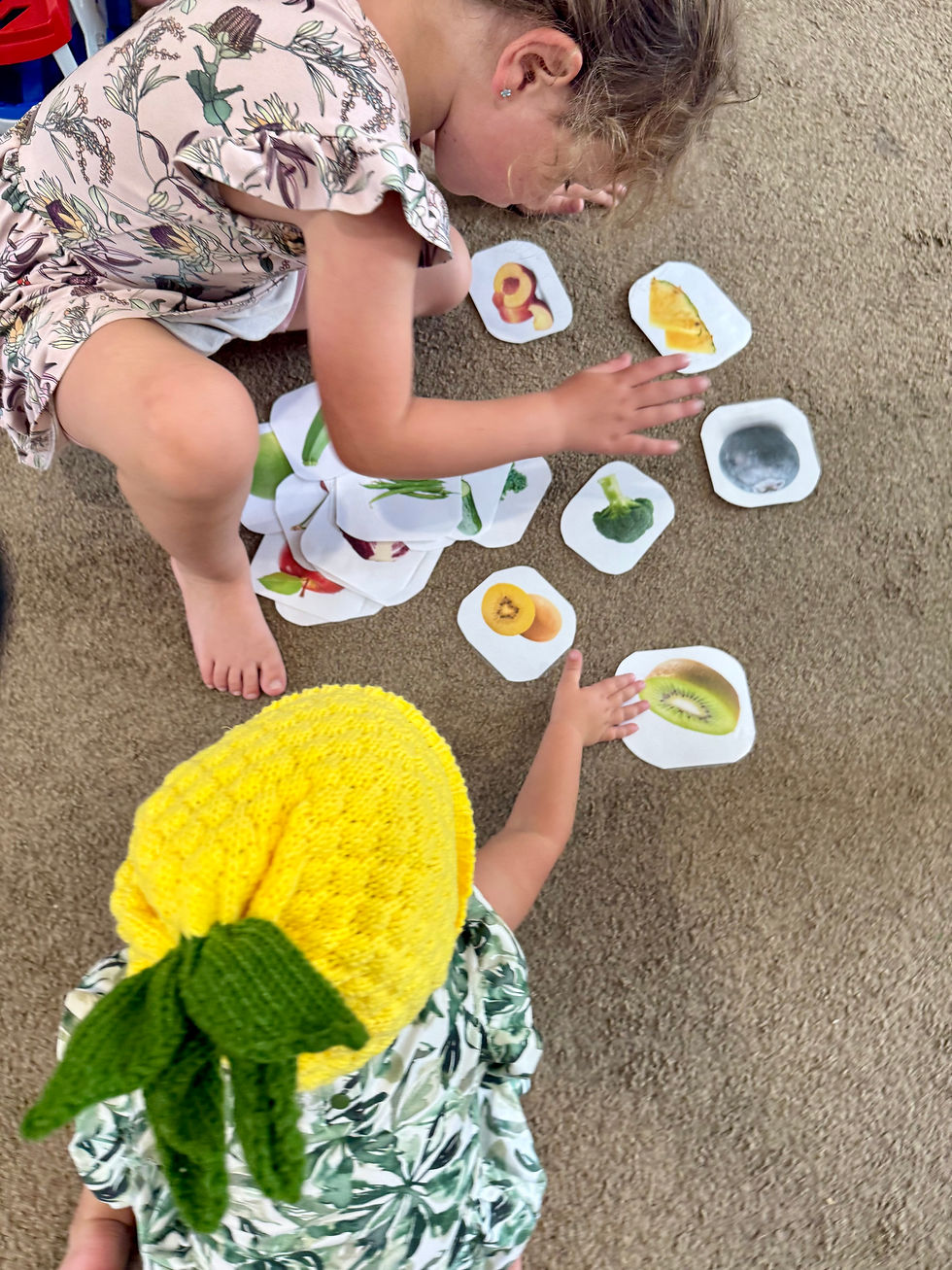
Seeing, touching, smelling, talking about, preparing and tasting foods gives children opportunities to becomes familiar with them.
And sometimes, the food that a child says "I don't like today" becomes a food they are willing to try tomorrow.
The people and environments around children matter too
Children learn by observing the people and environment around them. Early childhood services are food environments, and children can spend a signifcant amount of time in education and care settings.
This is one reason why Munch & Move is such an important initiative in NSW. Munch & Move is a NSW Health program designed to support health messages for children in ECEC settings. It supports services to create environments that encourage healthy eating, while building educator's knowledge and skills. It supports services to embed healthy practices into everyday environments and routines.
So where does Healthy Little Heroes fit?
At Healthy Little Heroes, we see nutrition education as one positive experience within a much bigger food environment.
When children participate in I can EAT a rainbow, Little Farmers, Happy Lunchbox or Mini Rainbow Heroes, we're creating opportunities for children to:
discover a variety of real fresh fruits and vegetables
see foods in a new way
explore their smell, texture and appearance
interact with food through play and hands-on experience
develop language and confidence around food
learn where food comes from and connect them with food origins
associate healthy food with positive experiences
Nutrition education and healthy environments work together
Research examining interventions that combine nutrition education with changes to the food environment suggests that combining the two can be more effective for improving children's dietary intake than changing the food environment alome.
Think about it this way.
A child might learn that vegetables help their body grow and stay healthy.
But if they rarely see vegetables, don't have opportunities to interact with them, or don't experience them in positive ways, that knowledge has limited opportunity to translate into behaviour.

The food environment outside the service
Children are surrounded by a much larger food environment. Think food advertising, branded packaging, takeaway food outlets, TV and social media, supermarket layouts.
We need to recognise that children are making food choices within an environment that is constantly communicating messages about food.
What can educators do?
An educator can ask these questions:
What food experiences are children having here?
Are healthy foods visible and accessible?
Are educators modelling postiive eating behaviours?
Do children have opportunities to explore unfamiliar foods without pressure?
Are mealtimes relaxed and positive?
Are nutrition concepts incorporated into everyday learning and play?
Can children participate in gardening, food preparation or other healthy eating learning experiences?
Are families supported with consistent, evidence-based nutrition messages?
We can’t control the whole food environment — but we can shape the environments around children
For educators, we can create positive food experiences and embed healthy eating into everyday practice.
For families, we can create a home environment where nutritious foods are familiar, accessible and part of normal family life.
For Healthy Little Heroes, it means creating engaging experiences that help children build confidence, knowledge, curiosity and positive associations with food.
Because if we want children to eat well, we need to think beyond the plate.
We need to think about the world around the plate too.
Sources worth exploring
Food Environment and Childhood Overweight/Obesity: A Systematic Review (2026) — reviewed 81 studies from 2020–2025 and examined food environments through availability, accessibility, affordability and appeal.
Food marketing and children’s eating behaviours (JAMA Pediatrics, 2022) — systematic review and meta-analysis of 96 studies.
Munch & Move — NSW Health — current program information and resources for ECEC services.
Implementation of Munch & Move in NSW (2020) — Australian evidence examining implementation across NSW ECEC services.


Comments